AREAS

Mobile Network Planning and Optimization

Research on simulation-based and data-driven methods for the planning and optimization of mobile networks, including 5G and future generations. The group develops AI-driven algorithms to enhance network efficiency, supported by experimental infrastructures and collaborations with leading telecom companies.

Wireless Network Measurements and Analytics

This research line focuses on the evaluation of wireless network quality and coverage through large-scale measurements based on real-world data, including drive tests and crowdsourced data from operational wireless networks. Statistical and machine learning techniques are applied to analyse user-generated measurements, identify performance patterns and anomalies, and support performance assessment and benchmarking of next-generation wireless networks, including 5G, 6G, and emerging direct satellite-to-device services.

ICT Policy and Regulation

This research line addresses ICT regulation and policy through the development of techno-economic models and strategic analyses of telecommunication networks. It examines spectrum policy, infrastructure investment strategies, and broadband and digital policies, assessing their impact on deployment decisions, market structure, competition, and long-term sector development. The research also explores the links between digitalisation, competitiveness, and governance, with particular attention to the geopolitical implications of digital infrastructure and technological leadership, providing evidence to support both public and private decision-making in next-generation network ecosystems.

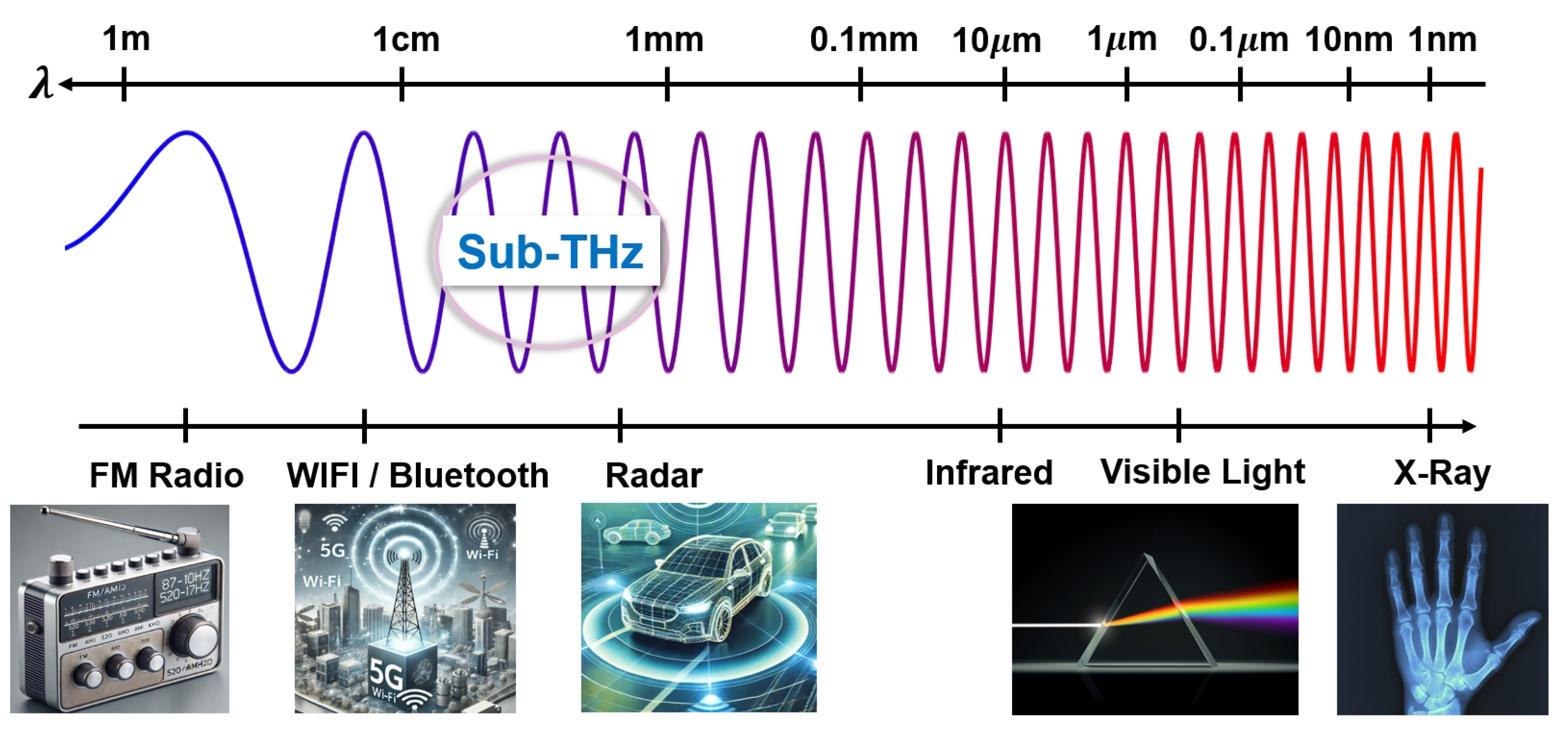
Millimeter-Wave and sub-THz Propagation Modelling

Experimental study of radio wave propagation in millimeter-wave and sub-THz frequency bands for terrestrial and satellite links. The group characterizes the propagation channel, analyzes atmospheric effects such as rain and clouds, and contributes to ITU-R Study Group on Propagation. 

Emerging 5G/6G Technologies and Experimental Infrastructures

Research and experimentation on emerging technologies for 5G and 6G, including Open RAN systems, private 5G networks, and testbeds that enable innovation and validation of next-generation wireless solutions.

Data Economy

Research on the value, governance, and regulation of data in the digital ecosystem. This area explores how data is generated, exchanged, and monetized across industries, with a focus on data markets, pricing mechanisms, and the economic impact of information flows. The group also studies the ethical and regulatory dimensions of artificial intelligence, privacy, and data sharing, contributing to a more transparent and sustainable digital economy.

RECENT RESEARCH PROJECTS

Cognitive Hospital (2025–2026)

Funding: Aptica S.L. (Subcontracted, CAM funding)
PI : José Manuel Riera Salís

Research project applying radio technologies and AI-driven communication systems to develop intelligent hospital infrastructures.

A Tool to Characterize end-to-end latency in wireless networks using crowdsourced measurements (2025)

Coordinator: Telefónica S.A.
PI: Santiago Andrés Azcoitia
Researchers: Zoraida Frías, Jorge García Cabeza, Mónica Salmador Yagüe

Extraction and preprocessing of massive crowdsourcing data to train an ML model capable of predicting latency in wireless networks of Telefónica in Spain. Study of features and network segments that affect latency measurements and automated detection of anomalies.  

6GREEN: Green Technologies for 5/6G Service-Based Architectures (2023–2026) 

Funding: Horizon Europe, Grant Agreement No. 101096925
PI: Zoraida Frias (co-PI with José Ignacio Moreno Novella)
Researcher: Santiago Andrés Azcoitia

This European project investigates sustainable and energy-efficient technologies for next-generation 5G/6G service-based network architectures. The GTIC team contributes to the development of AI-driven models for D-band communications and techno-economic frameworks that enable greener and more efficient mobile networks.

CROWD-X: Leveraging Crowdsourced Measurements for Wireless Network Performance Optimizatiion (2025 – )

Funding: Weplan Analytics
PI: Zoraida Frías Barroso

CROWD-X is an R&D project funded by Weplan Analytics that aims to explore and develop methods to exploit crowdsourced measurements to improve the understanding, optimization and evaluation of wireless networks. CROWD-X seeks to transform crowdsourced information into actionable insights that can support decision-making across the wireless ecosystem, benefiting operators, regulators, infrastructure providers, and other industry stakeholders. 
 

USEMCO: Understanding Spectrum Use through Mobie Crowdsourced Measurements (2025 – 2026)

Funding:  Línea A Doctores Emergentes de la Comunidad de Madrid
PI: Zoraida Frías Barroso

USEMCO is an R&D project focused on investigating how massive end-user measurements can be used to characterize and understand radio spectrum usage. The project aims to develop methods for inferring mobile network load and modeling spectrum utilization patterns. 

Modeling EM Propagation at sub-THz and Optical Frequencies for 6G Backhaul Links (2024–2025)

Funding: Politecnico di Milano
PI José Manuel Riera Salís
Link: portalcientifico.upm.es/es/ipublic/item/10187936

Investigation of electromagnetic propagation in sub-THz and optical bands for future 6G backhaul links, in collaboration with international research groups.

Technical Report on the Shutdown of Broadcasting and Mobile Services at Pozuelo Site (2024)

Funding: Axion Infraestructuras de Telecomunicaciones S.A.U.
PI : José Manuel Riera Salís

Technical assessment of the deactivation of broadcasting and mobile communication services at the Pozuelo site, analyzing interference and operational impact.

Tera6G: TERAhertz Integrated Systems Enabling 6G Terabit-per-Second Ultra-Massive MIMO Wireless Networks (2023–2026)

Programme: Horizon Europe – HORIZON-JU-SNS-2022-STREAM-B-01-03
Grant Agreement: No. 101096949
Coordinator: UC3M (Spain)

PI: Zoraida Frías
Link: cordis.europa.eu/project/id/101096949

This European project aims to develop integrated systems operating in the terahertz (THz) frequency range, enabling ultra-high-capacity 6G networks with terabit-per-second data rates and ultra-massive MIMO architectures. GTIC contributes to research on radio interface technologies and system integration for next-generation THz wireless communications.

Advanced Radio Optimization Solutions based on Artificial Intelligence
(2023 –
)

Coordinator: Telefónica Móviles España
PILuis Mendo

Automated algorithms for radio optimization using network-side data

5GPerformance – 5G Network Performance Evaluation and Anomaly Detection using Machine Learning on Crowdsourced Data (2023 – 2025)

Funding: UNICO I+D 6G 2023 (Spain), through Weplan Analytics
PI :Zoraida Frías
Link: portalcientifico.upm.es/es/ipublic/item/10338847

This project focuses on the evaluation of 5G network performance and the detection of anomalies by applying machine learning techniques to large-scale crowdsourced network data. The research aims to improve monitoring and diagnostic capabilities in next-generation mobile networks, enabling early detection of performance degradations and supporting more intelligent and adaptive 5G/6G infrastructures.

Prediction of Mobile Network Coverage Areas from Limited Big Data Volumes Generated by Smartphones (2023 – 2024)

Funding: CDTI – Centre for the Development of Industrial Technology (Spain), through Weplan Analytics
PI :Zoraida Frías
Link: iptc.upm.es/projects/spzcdms/

This project develops an AI-based system for predicting mobile network coverage areas using limited volumes of crowdsourced data collected from smartphones. The goal is to enhance the accuracy and efficiency of radio coverage prediction models, even when measurement data is incomplete or sparse. The approach combines data analytics, geolocation information, and machine learning algorithms to provide intelligent estimation of service areas and optimize network deployment strategies

5G+RADIOLAB – RF Laboratory for Advanced 5G and 6G Technologies
(2022–2025)

Programme: Spanish National Programme – UNICO I+D 6G 2022
Funding: Ministry of Economic Affairs and Digital Transformation (Spain)
PI :José Manuel Riera Salís

Link: portalcientifico.upm.es/en/ipublic/item/10188865

Creation of a dedicated RF laboratory to support research and development of advanced 5G and future 6G technologies, including experimental platforms for radio access and propagation studies.

DisRadio: Radio Resource Management and RIS Development (UNICO I+D 5G 2021) (2022–2025)

Programme: Spanish National Programme – UNICO I+D 5G 2021
Funding Institution: Ministry of Economic Affairs and Digital Transformation (Spain)
PIJosé Manuel Riera Salís, Luis Mendo Tomás
Researchers: Luis Mendo Tomás

Link: iptc.upm.es/disradio

This national research project focuses on the efficient management of radio resources and the development of Reconfigurable Intelligent Surfaces (RIS) for advanced 5G environments.
DisRadio aims to enhance the performance and energy efficiency of wireless networks through intelligent radio design, dynamic optimization, and experimental validation of RIS-based systems.

Study on the Need to Modify the Procedures for Controlling Radio Emission Levels from Base Stations due to the Incorporation of 5G Technology (2021-2022)

Funding: Colegio Oficial de Ingenieros de Telecomunicación                        
PIJosé Manuel Riera Salís
Researchers: Luis Mendo Tomás 

Automatic Planning of 5G Networks Using ArtificiaI Intelligence (AI45GP) (2021-2022)

Funding: Aptica S.L.                       
PI: Luis Mendo Tomás
Researchers: José Manuel Riera Salís

Development of advanced techniques for 5G radio network planning.

Q/V Band Large-Scale Spatio-Temporal Channel Models for Satcom Design and Operations (2020–2025)

Funding: European Space Agency (ESA), through ONERA
PI José Manuel Riera Salís
Link: iptc.upm.es

Development of advanced propagation models for Q/V band satellite communication systems, using large-scale experimental data to characterize spatio-temporal channel behavior.

Study of a Direct Aircraft To Ground Communication (2020)

Funding: Airbus Defence and Space
PI Luis Mendo
Resarchers Pedro García, José Manuel Riera

Development of simulation models on the use of 5G NR in air to ground communications

ARIADNE: Artificial Intelligence Aided D-band network for 5G long term evolution (2019 – 2023)

Programme: Horizon 2020 – 5G Public-Private Partnership (5G-PPP)
Grant Agreement: No. 871464
Coordinator: EURESCOM (Germany)
PIJosé Manuel Riera Salís
Researchers: Zoraida Frías Barroso, Jorge Pérez Martínez, Luis Mendo Tomás, Santiago Pérez Peña, Domingo Pimienta del Valle, and other members from UPM research groups (GEA, GTIC, CEMDATIC, and IPTC).

Link: cordis.europa.eu/project/id/871464

This European Horizon 2020 project focused on applying Artificial Intelligence to enhance the performance of D-band wireless communications for 5G networks.

ARIADNE combined innovative radio-frequency architectures with AI-based resource management and network planning to improve spectrum efficiency, radio performance, and the overall energy efficiency of next-generation access networks.

Millimeter-Wave Channel Modelling and Radio Planning for 5G Networks (2019–2022)

Funding: UMinistry of Science, Innovation and Universities (Spain)
PI : José Manuel Riera Salís, Luis Mendo Tomás 
Link: portalcientifico.upm.es/es/ipublic/item/9284337

Research project focused on channel modelling and radio network planning for 5G systems, with emphasis on millimeter-wave propagation and its impact on coverage and performance.

5G VINNI: 5G Verticals Innovation Infrastructure (2017–2021)

Programme: Horizon 2020 – 5G Public-Private Partnership (5G-PPP)
Grant Agreement: No. 815279
Coordinator: Telenor (Norway)
PIJorge Pérez Martínez (co-PI with José Ignacio Moreno Novella)
Link: cordis.europa.eu/project/id/815279

This European Horizon 2020 project created a large-scale 5G end-to-end facility to test, validate, and demonstrate innovative vertical industry use cases.
5G VINNI provided an experimental infrastructure that accelerated the uptake of 5G technologies by enabling interoperability testing, service deployment, and performance evaluation under real-world conditions.

FACILITIES

OpenRAN 5G Laboratory

5G pilot network based on Open RAN architecture, enabling testing and experimentation of next-generation radio access technologies

Private 5G Network

Private 5G system including millimeter-wave frequencies, supporting experiments in advanced radio propagation and industrial connectivity

Nemo Handy 5G Platform

Professional tool for 5G radio interface measurement and monitoring, used for network performance analysis and field testing

6GMadLab

GTIC takes part in this 5G/6G laboratory, which integrates instrumentation for measuring antennas and RF subsystems, and for generating and measuring 5G-NR signals, as well as several private mobile networks providing sub6G and mmWave indoor and outdoor coverage


Propagation and meteorological measurements

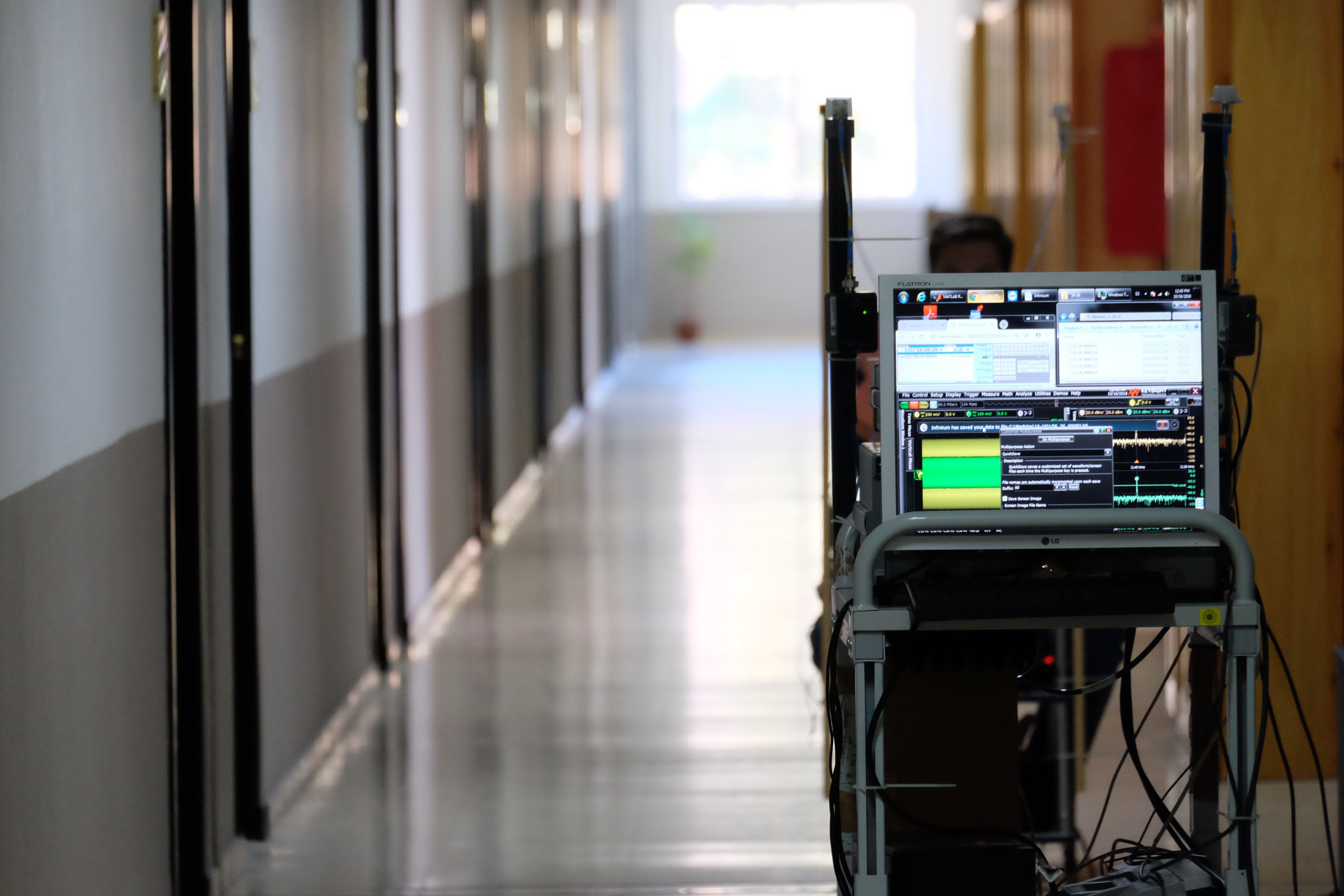
Infrastructure for wireless propagation measurements in mmWave bands; indoor and outdoor scenarios. Q-band satellite terminal and advanced meteorological equipment. Extensive database of measurements at different frequency bands

CHAIRS

Cátedra Telefónica Economía, Sociedad y Transformación Digital de la Universidad Politécnica de Madrid

Director of the Chair: Jorge Pérez Martínez 

The Telefónica–UPM Chair on Digital Economy, Society and Digital Transformation serves as a university–industry platform to promote education, research, and knowledge dissemination in the field of the digital economy. Its activities include training programmes, innovation initiatives, academic research, and public debate on digital transformation and related public policy challenges.

Cátedra Huawei-UPM 5G

Director of the Chair: José Manuel Riera Salís

The Huawei–UPM Chair on Next-Generation Networks for a Digital, Sustainable and Secure Society promotes education, research, and talent development in advanced communication networks, with a focus on 5G and future 6G technologies. It supports master’s theses, research studies, academic events, and training initiatives that connect cutting-edge network technologies with societal, sustainability, and security challenges.

FORUMS

Coordinator: Jorge Pérez Martínez
The Internet Governance Forum (IGF) is a global multistakeholder platform hosted by the United Nations (UN) that facilitates dialogue on public policy issues related to the Internet, bringing together governments, the private sector, civil society, the technical community, and academia. IGF Spain is the Spanish national initiative of the IGF, providing an open forum for dialogue on Internet governance issues in Spain and connecting national discussions with the global IGF process.